
What makes Tbilisi so unique for photography?

Locals in conversation at Station Square market, Nikon F3 + Zeiss 50mm F1.7 - Fuji C200
There are many cities around Europe that are wonderful to visit at all times of year - places that offer grand Boulevards, immaculate squares and charming historic architecture alongside the more modern.Wonderful cafes, restaurants, galleries, museums and shops are the norm. You can dip off into quaint side-streets and find more than your fair-share of gentrification in the form of minimalist speciality coffee joints, achingly cool restaurants that eschew traditional signage or luxury goods boutiques - we truly live in a remarkable time, yet often I sense that many of these places feel to me to be a little sterile, somewhat too manicured… they make me wonder if people actually live and work around these places, and it should come as little surprise that in many cases: they don’t. The waves of gentrification that made former industrial zones cool also pushes up rents and forces out locals leaving us with places that whilst ‘nice’ can also feel a little soulless.

Art-Deco Staircase in NeuTiflis - Olympus EM1 MkII with Panasonic Leica 8-18mm F2.8
The Georgian capital has seen a couple of waves of gentrification since I moved there in 2013, we now have a plethora of all the things I mentioned above and an inexplicable burgeoning of super-luxury developments to-boot, however where Tbilisi differs from her mainland European siblings is that you don’t have to go far off-the-beaten track to peel back the layers and discover authenticity in the form of as-yet unrenovated buildings and courtyards that date back just over 120 years, in some cases more. We find Soviet Brutalism alongside Art-Deco and unavoidably we also find the modern steel & glass constructions so loved by people with more money than taste. Whilst we might argue that some of the renovations aren’t necessarily “historically accurate” because the original colours of facades weren’t observed in general what’s been done brings buildings that were almost beyond-repair back to life so we too may experience the quarters that have been part of renewal projects in a state close to the original.

The “Book Building” of Teak with the Soviet Prefab Sprawl of Mukhiani behind. Olympus EM1 Mk II + Zuiko Pro 25mm F1.2
As a photographer I’ve been dedicated to exploring as many small streets and courtyards as possible over the years, documenting as I go in the awareness that what I find today may not necessarily be there tomorrow. Tbilisi is quite unique in that it has many courtyards and balconies that are considered semi-private semi-public spaces - that’s to say that so-long as we’re respectful of residents privacy and don’t make a lot of noise people generally let us explore these areas and oftentimes will strike up a conversation as to where we’re from. In exceptional circumstances wine or hard alcohol may be provided. Just today I was reminded of the fragility of the older buildings nestled just off popular tourist streets - precariously propped up with wooden scaffolds that look like they wouldn’t survive much moisture. Unfortunately many buildings in that area suffer from subsidence and wouldn’t so much survive as need to be demolished and reconstructed as replicas. Surely a timely reminder to come and take in as much of this heritage as possible whilst it’s still accessible.
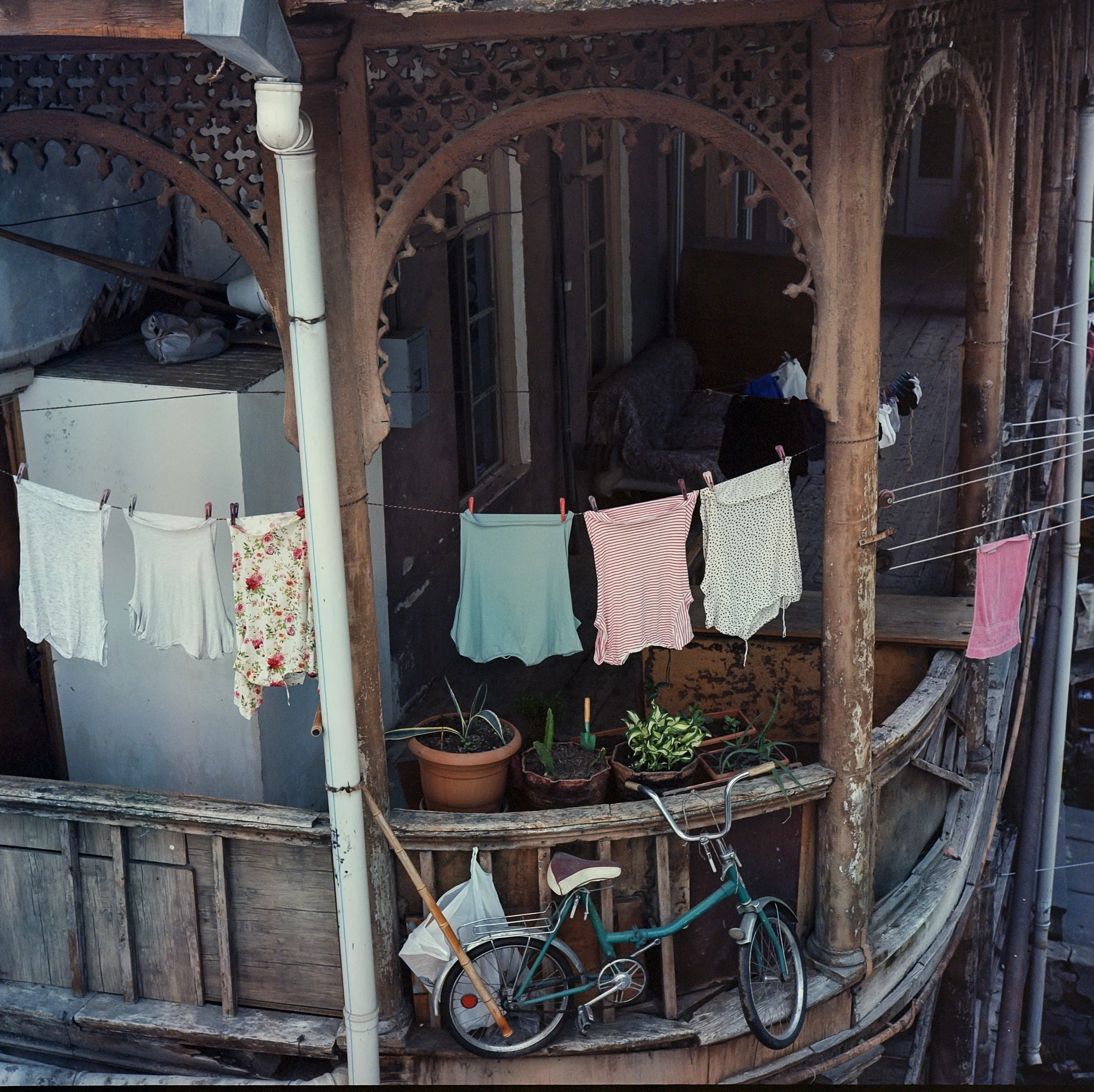
Green Bike - Ingorokva St Balcony - Rolleiflex 2.8C on Fuji Pro400H
We’re blessed with a very pleasant climate in Tbilisi, it’s often pretty dry and usually warmer than the rest of Georgia - what that means in practice is that from mid April through the end of June it’s pretty nice - July and August can often be unbearably hot which is why most locals relocate to the Black Sea coast, if you can handle heat then do come in the summer because often the city is pleasingly empty, although due to the harshness of light caused by the high sun early mornings or evenings are preferable for photography. Autumn is where the magic happens, September is still warm, we often have a golden October and pleasant warmth often extends well into November - the light also gets better as the sun sits lower in the sky. Personally I really like the wintertime which can often be sunny and dry if not all that warm - and the light is delectable at this time.

Narikala Fortress, Tbilisi Old Town & River Mtkvari at dawn in summer - Olympus EM1 MKII + Zuiko Pro 25mm F1.2
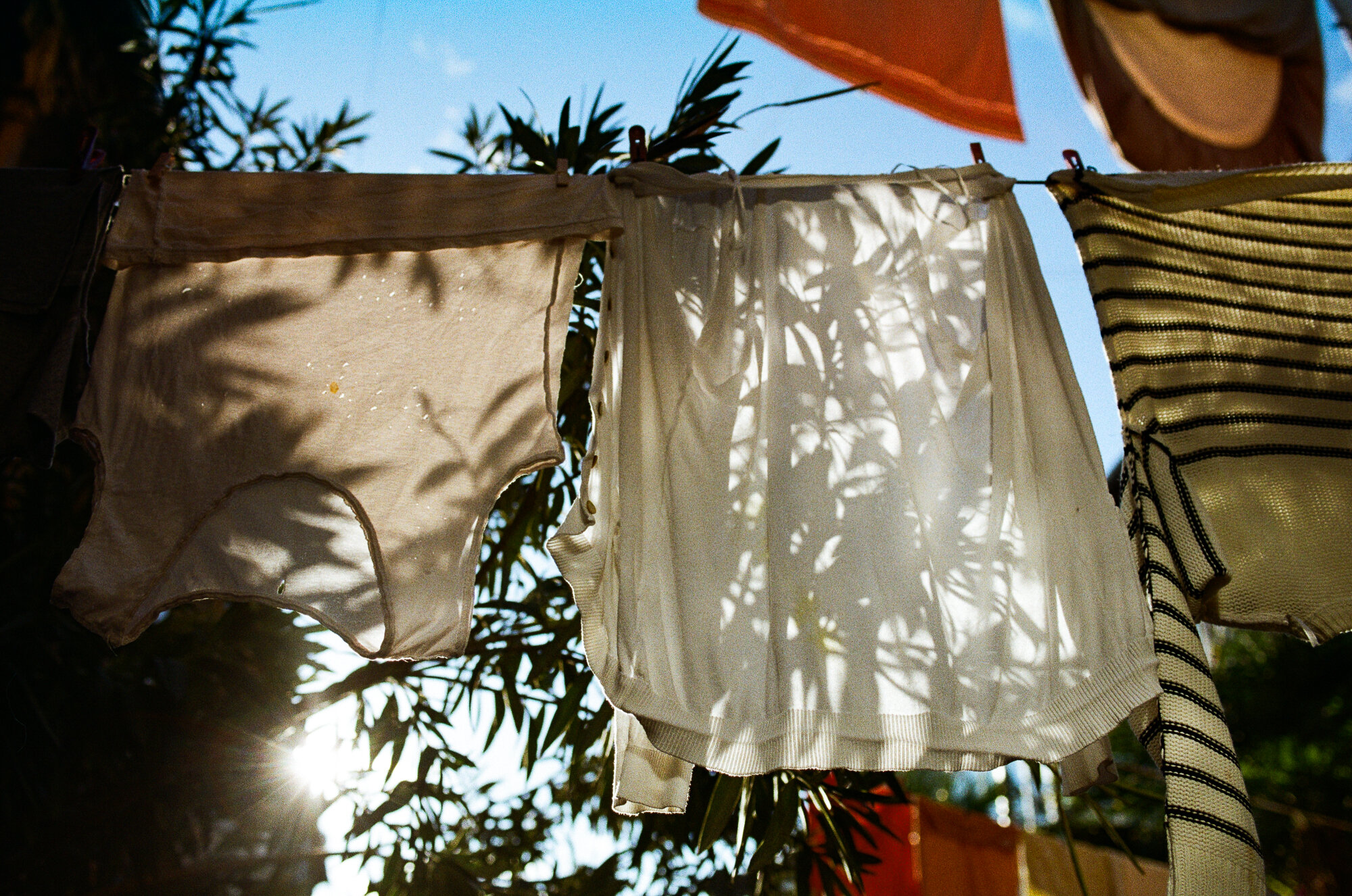
Wash Day in Chugureti - Nikon FM3A, Zeiss Distagon 2/35 on Kodak Proimage 100
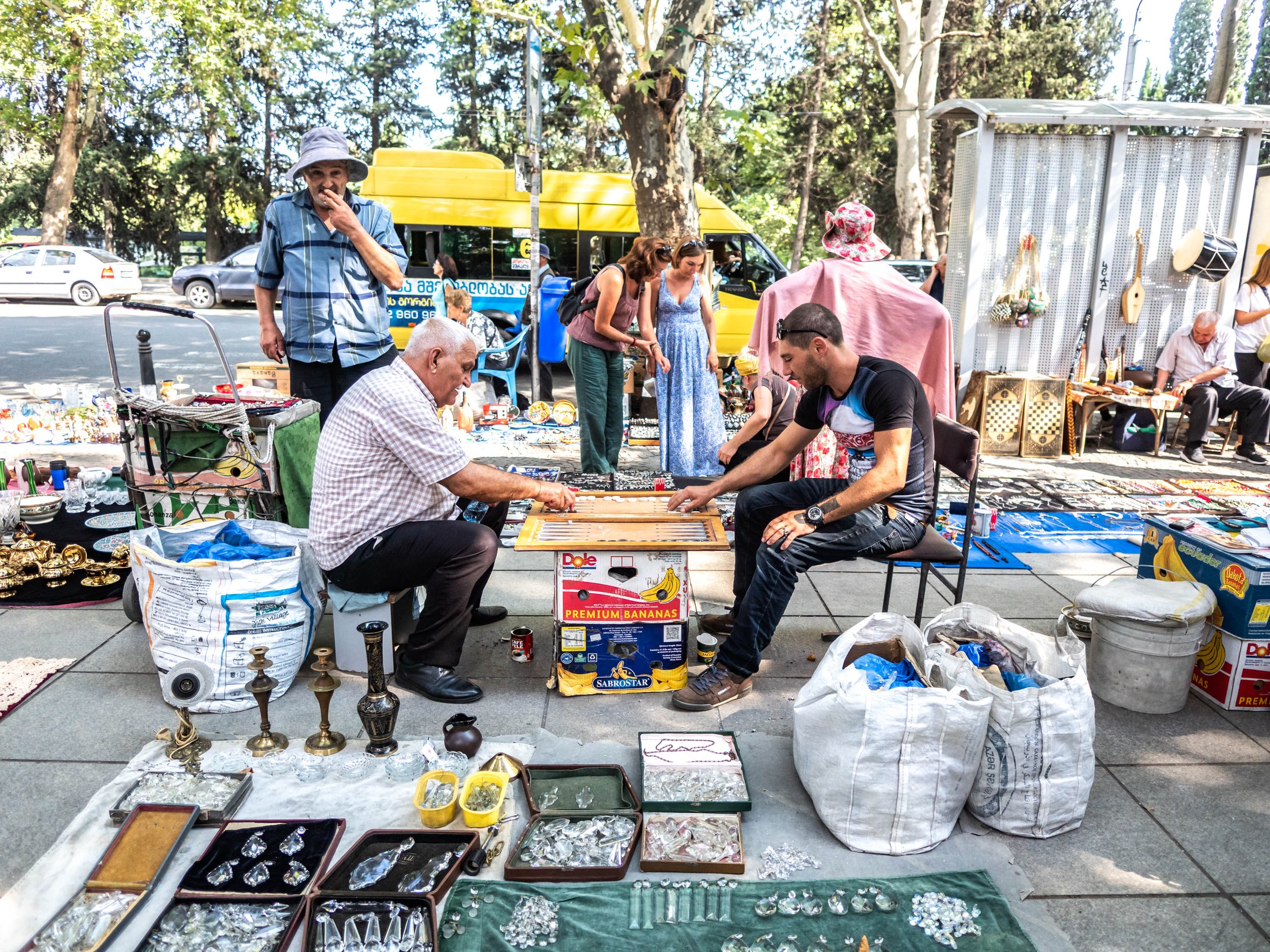
Dry Bridge Market Backgammon - Olympus EM5 MkII + Zuiko Pro 12-40 F2.8
It would be remiss of me to not mention the locals - there’s a lovely curiosity to people here and they’re not as highly-strung as people in Europe if they see you taking photos. As always you’ll find some people don’t want photos taking and they’ll let you know - at the same time you’ll also find many people with a joie-de-vivre who’ll happily pose for photos. As ever it’s wise not to be intrusive and to respect people’s wishes - at the same time I do think it’s easier and less-daunting to capture scenes with human involvement here than it is in many other countries.

Wisteria time in Sololaki - Rolleiflex 2.8C on Fuji Pro400H
Tbilisi has a lot of patina, there are many faded facades and layers of past glories that can be uncovered with relative ease - in many ways the weathering of buildings feels reminiscent of places like Cadiz where the facades whisper of years of change along with former glories. The city was fortunate to have been relatively unscathed in WWII and also survived the modernisation excesses of the Communist Party who pretty-much erased all traces of historic building substance in the Armenian Capital Yerevan.

The hidden balconies of Kala - Rolleiflex 3.5E on Fuji Pro400H
We even have an area called Neu Tiflis where many of the buildings were built by German settlers, the buildings feel very European and the grid structure of the streets is in stark contrast to the more asiatic winding streets of Kala in the old city on the other side of the river. It’s this meeting of European and Asian and old with new that make the city so fascinating for anyone appreciative of culture and aesthetics - even after so many years of pounding the streets I still make new discoveries and marvel at the ways in which the locals ensure that there’s a human warmth to their environs - something you appreciate best when witnessing it first hand. Naturally I do what I can to capture this in my photos but as the saying goes - true beauty is in the eye of the beholder…
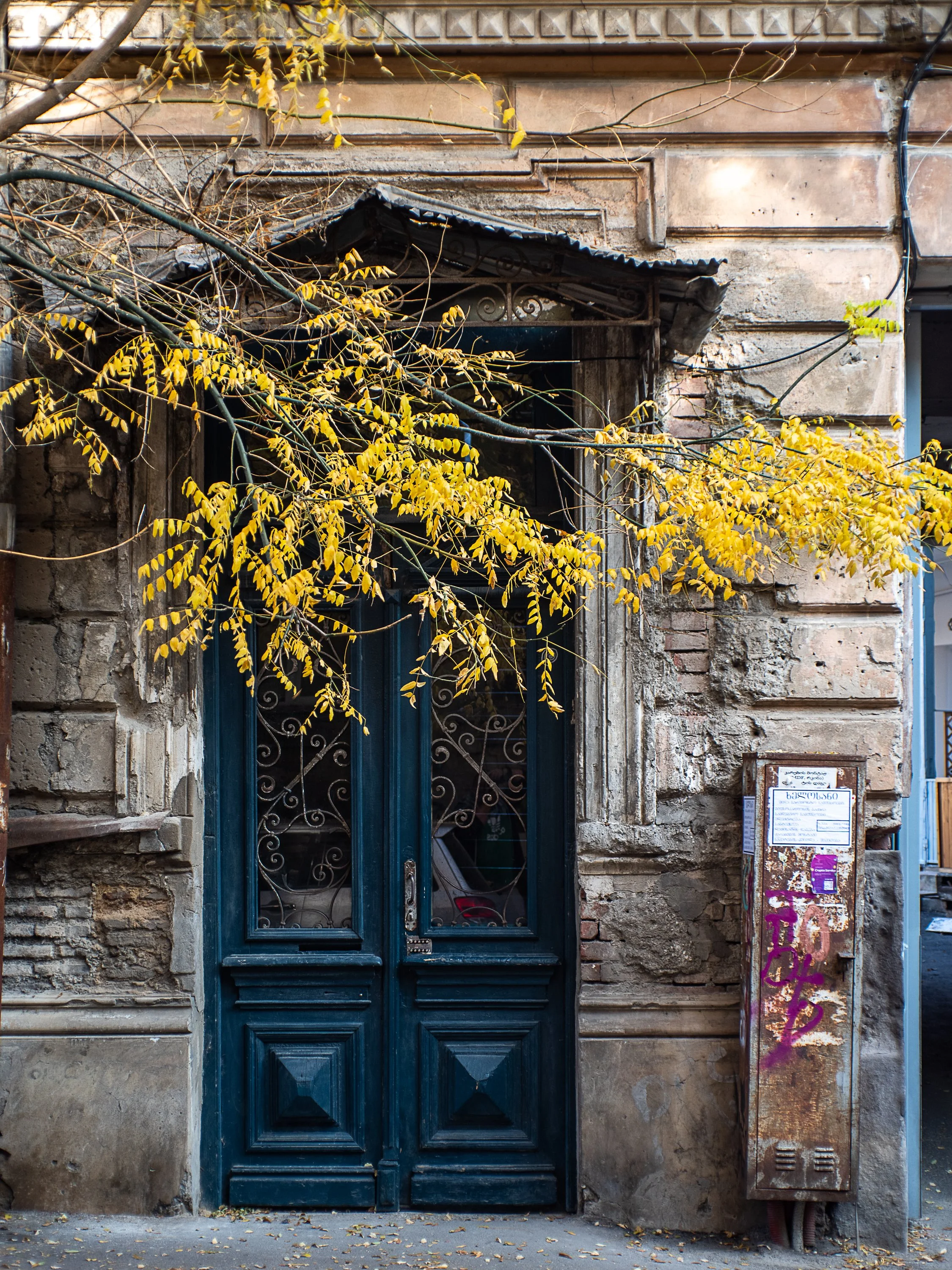
Neu Tiflis in Autumn - Pentax K1 + 50mm F2.8
If I’ve whet your appetite for exploring Tbilisi feel free to get in touch, I’m offering workshops that centre on mindful photography - whether you prefer to use film or digital cameras I’ll be glad to share my experience with you here in this beautiful city.
If you enjoyed this post you can find more of my Tbilisi photos in this gallery